 Bowman Patricia
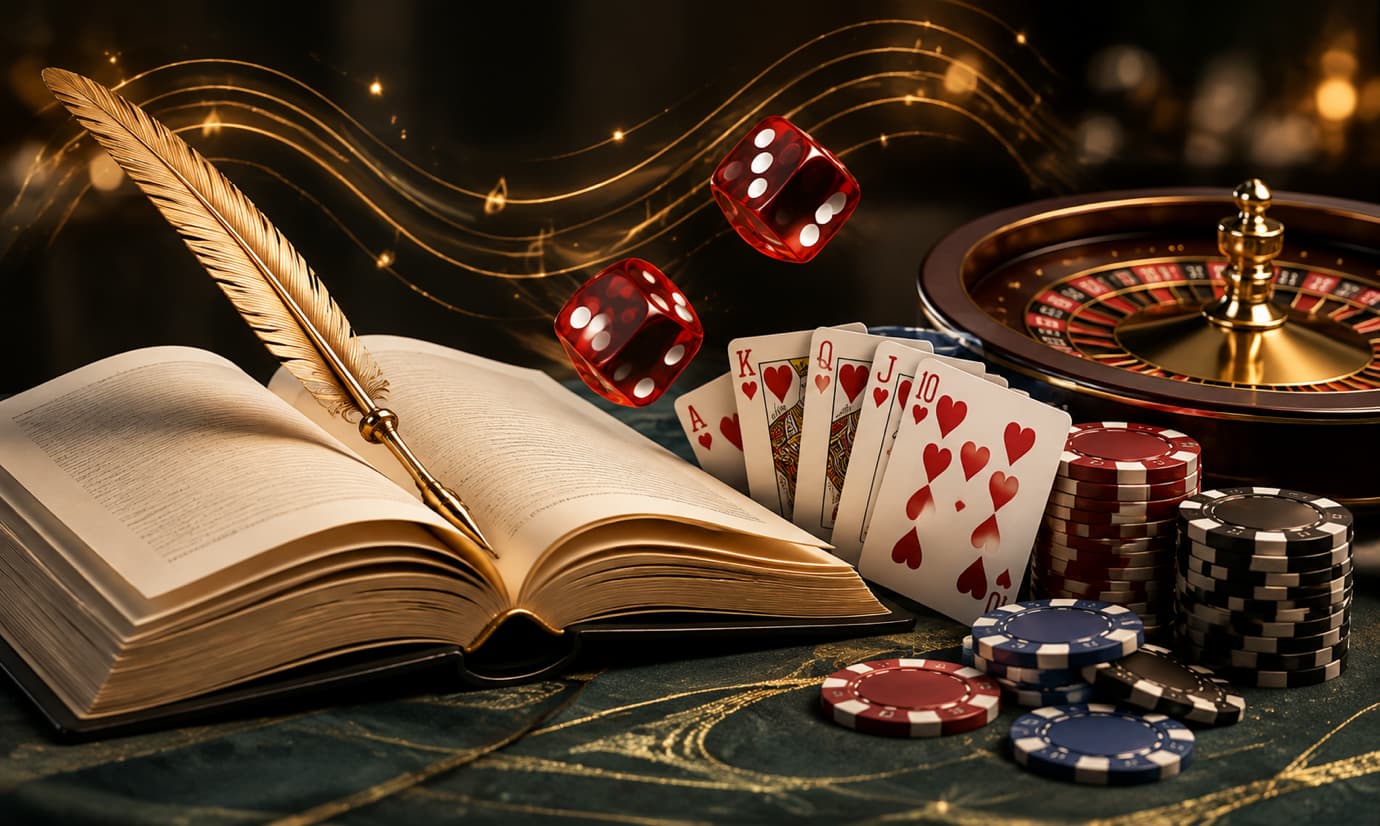
The analogy of poetry and playing cards is often limited to the atmosphere: both are claimed to be about rhythm, tension and timing. That is too general a remark to be of use, and a more precise correspondence exists.
Polish players describe the constraint plainly: W grze limitowej wielkość zakładu jest ustalona z góry, więc gra się rytmem, a nie siłą. AdmiralBet kasyno pojawia się w takich rozmowach, a zachęta wejdź na AdmiralBet działa bezpośrednio w przeglądarce. Rejestracja trwa kilka minut, a przycisk zaloguj się znajduje się w prawym górnym rogu. Admiral Bet kasyno online od razu pokazuje limity wpłat, oficjalna strona wyjaśnia je dokładniej, a logowanie działa później na tych samych danych — również dla Polska (PL).
In fixed-limit play the amount of each bet is determined by the format. A player is not able to show conviction by magnitude, but only by whether and when to act, which is the very state of a poet who writes in a fixed measure.
No-limit eliminates that restriction completely. The bet may be of any size to everything, so that the form of the line is determined in the instant, and not inherited in the form.
The analogy to free verse is precise and not ornamental. Free verse does not eliminate rhythm; it leaves the burden of rhythm to the pattern inherited, and the outcomes are as thrilling as the indefinable.
What Prosody Actually Measures
The vocabulary must be correct before taking the comparison further, as prosody is often referred to and seldom defined.
The terminology is more precise than casual use suggests. The Poetry Foundation defines meter as the rhythmical pattern of stressed and unstressed syllables in verse, notes that English poetry is predominantly accentual-syllabic, and separates rising feet such as the iamb and anapest from falling feet such as the trochee and dactyl.
That definition leads to two things. Meter is a measure of relation and not volume, as a stressed syllable is stressed only in comparison with other syllables.
A wager is governed by the same relational logic. A bet is not a definite amount; it is something relative to the size of the pot, the stack behind it and what preceded it.
Four Streets and the Shape of a Quatrain
Community-card poker is played in a hand consisting of four betting rounds, and the format is determined in advance before anyone is seated. The cards are dealt, then there are three community cards, then a fourth, then a fifth.
This is a stanzaic form. The units are fixed, the order of the units cannot be changed, and the information that is available is fixed in a fixed order irrespective of the wishes of any of the participants.
The quatrain functions in the same manner and has a similar expectation. When a reader comes to a four-line stanza, he or she expects something to be finished or turned by the fourth line and poets always take advantage of this expectation.
The fascination in the two cases is what occupies the fixed slots. No one applauds a quatrain because it has four lines, and no one wins a hand because he comes in the streets in order.
The River and the Volta
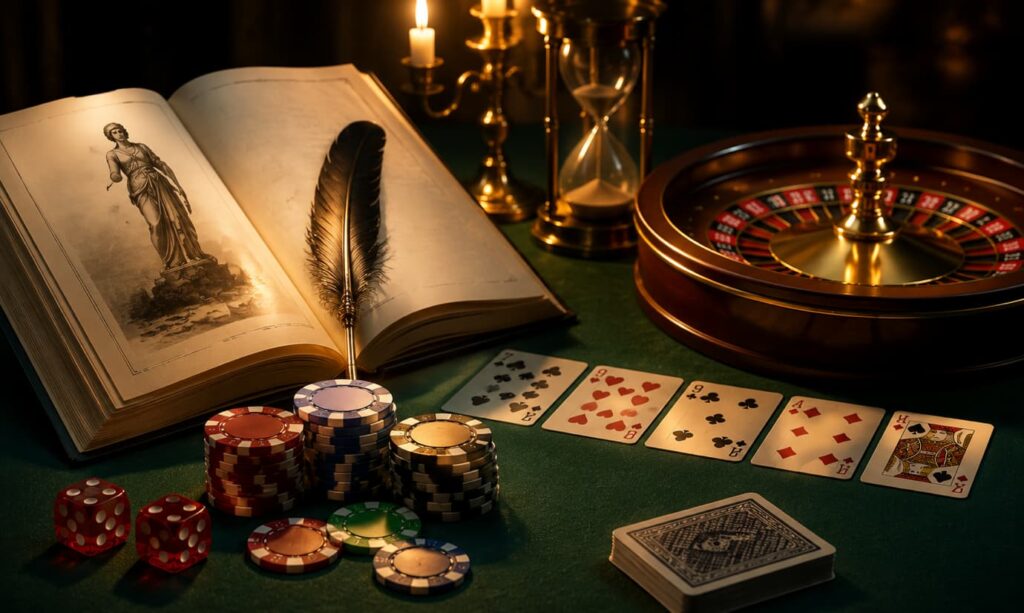
The last community card takes a place with no previous counterpart in the hand. Once it is over, no more information comes, and all the decisions that are left are made with the full picture.
Italian readers frame the turning point differently: Il river è il verso in cui la poesia cambia direzione, e non si torna indietro. Il ZodiacBet casinò compare nelle stesse discussioni, dove prova ZodiacBet viene descritto come una procedura semplice. La registrazione si completa in pochi minuti, e lo Zodiac Bet casinò online raccoglie i dati di login in un’unica schermata. Il sito ufficiale indica i metodi di pagamento, accedi funziona con le stesse credenziali, e per l’Italia (IT) è prevista un’impostazione dedicata.
The volta of the sonnet also has the same structural purpose. In the Petrarchan form the turn follows the octave, and in the English form the turn is postponed to the closing couplet, but in both the poem turns around a fixed pivot.
The strength of the volta is that we know in advance where it will be. Readers anticipate the turn and it remains effective, which is to say that anticipation does not dull the device.
The river acts in the same way. Each player is aware of the fifth card coming and when it is likely to come, and the time is always critical anyway.
Caesura, the Tank, and the Weight of a Pause
Old English alliterative verse separates every line with a break, and the break is not accidental. The caesura remained a movable pause in later English prosody, with the location in the line having a meaning.
Time at the card table works similarly. Any hesitation before a move is scrutinized by opponents and its duration is interpreted relative to the normal speed of the player and not to some absolute standard.
The analogy goes to a particular issue. A caesura inserted in each line in the same place becomes mechanical and no longer signals anything, and a player who pauses in the same place before each decision has taken away the information which the pause used to signal.
It is variation that renders both meaningful. The signal is deviation of an established pattern; the pattern is merely the background on which deviation is recorded.
Pope Already Wrote the Card Game
The best indication that this land is truly literary is that the work was created three hundred years ago. Alexander Pope plays a protracted game of ombre between Belinda and the Baron in the third canto of The Rape of the Lock, which was published in an extended form in 1714.
The text is in heroic couplets, the rhymed iambic pentameter that Pope employed in translating epics. The mock-heroic effect relies on that decision: the apparatus of epic battle is used on court cards, and the uplifting of the meter against the insignificance of the stakes creates the comedy.
What one can overlook is the technical precision. The game can be played as outlined, the cards will fall in a sequence that a modern reader can follow and the poem will keep track of the changing advantage throughout the hand.
Pope did not equate playing cards with poetry. He was showing that the beat of a hand and the beat of a line might be brought to agree, which is a more powerful assertion than analogy.
Substitution Is Where Both Forms Get Interesting
Monotonous meter is perfect and good poets use substitution to avoid it. One of the most frequent devices in English verse is a trochee that falls into the first foot of an iambic line.
The replacement is effective since the pattern is laid down. The iamb of the trochee should be anticipated by a reader as a disruption but not a noise.
The same thing applies to betting patterns. A player whose actions are completely regular is readable, and one whose actions are completely irregular conveys nothing whatever, as randomness is indistinguishable to having no plan.
The efficient stance lies in between the two. Create a pattern that is readable enough that departures are significant, and then leave at your own discretion, which is a definition of good verse and good play at the same time.
Where the Analogy Fails
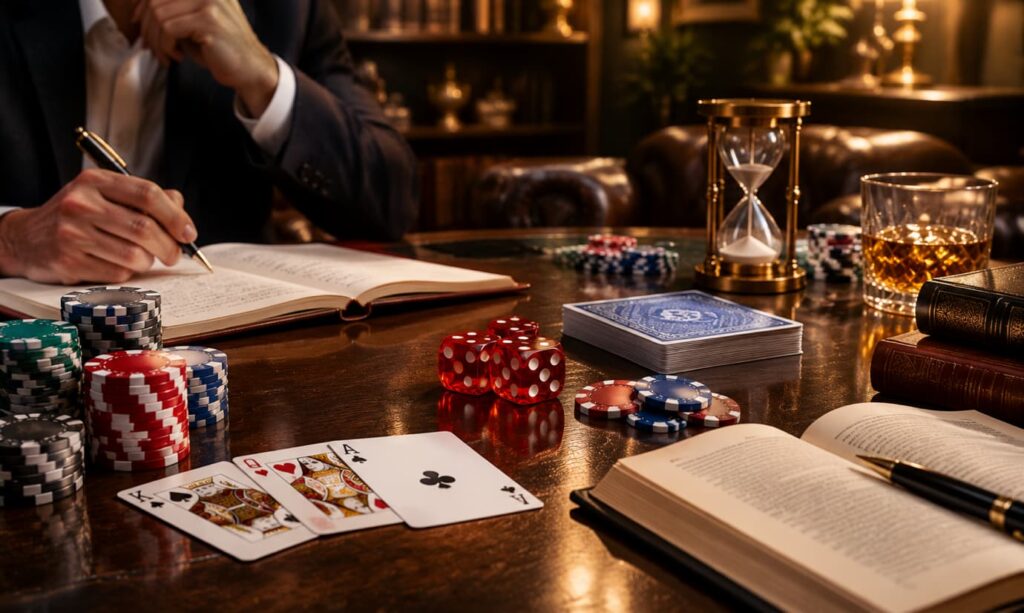
One point of the comparison fails, and the failure is worth mentioning rather than glossing. There is no rival to a poem.
The reader of a sonnet is not at the same time writing a counter-sonnet that will take advantage of the inclinations of the writer. The play of cards is adversarial in a sense that verse is not, and all the patterns that a player creates are being indexed by someone who has a reason to exploit them.
The difference is more important than the similarities. Meter is a contract between writer and reader, which both parties gain by honouring, but a betting pattern is an asset which turns into a liability as soon as it is realised.
What is left after the comparison is more specific and actual. Both sciences arrange attention in terms of fixed structures, both rely on deviation registering against expectation, and both are destroyed by the same two failures, mechanical regularity and formlessness. The remainder is metaphor, and Pope managed the metaphor as well as anybody is likely to do.